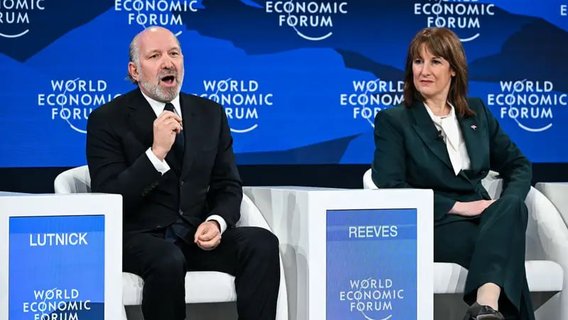
US Commerce Secretary Howard Lutnick stood before a gathering of global elites at the World Economic Forum in Davos on January 20, 2026, and delivered a message that cut to the core of decades of policy failures. Speaking on a panel titled "Global Economic Outlook," Lutnick did not mince words, stating that globalization has failed the West and the United States, leaving behind hollowed-out industries and forgotten workers. This declaration came amid rising tensions over trade, energy, and national security.
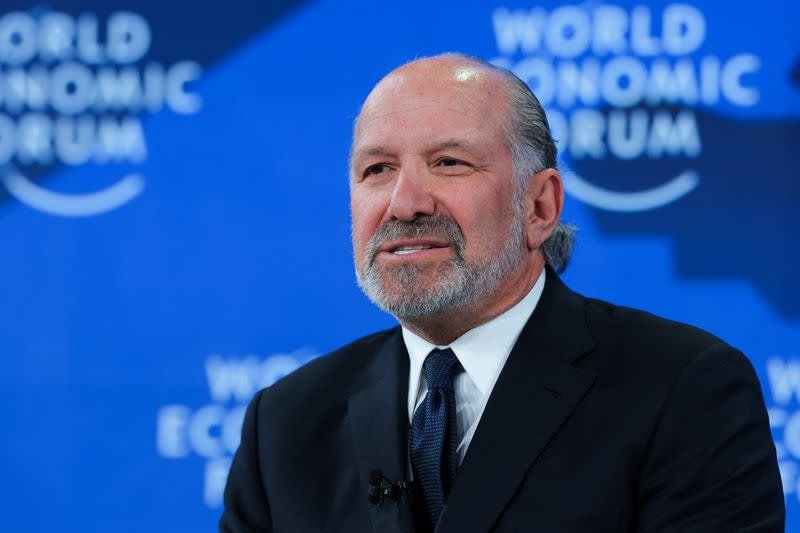
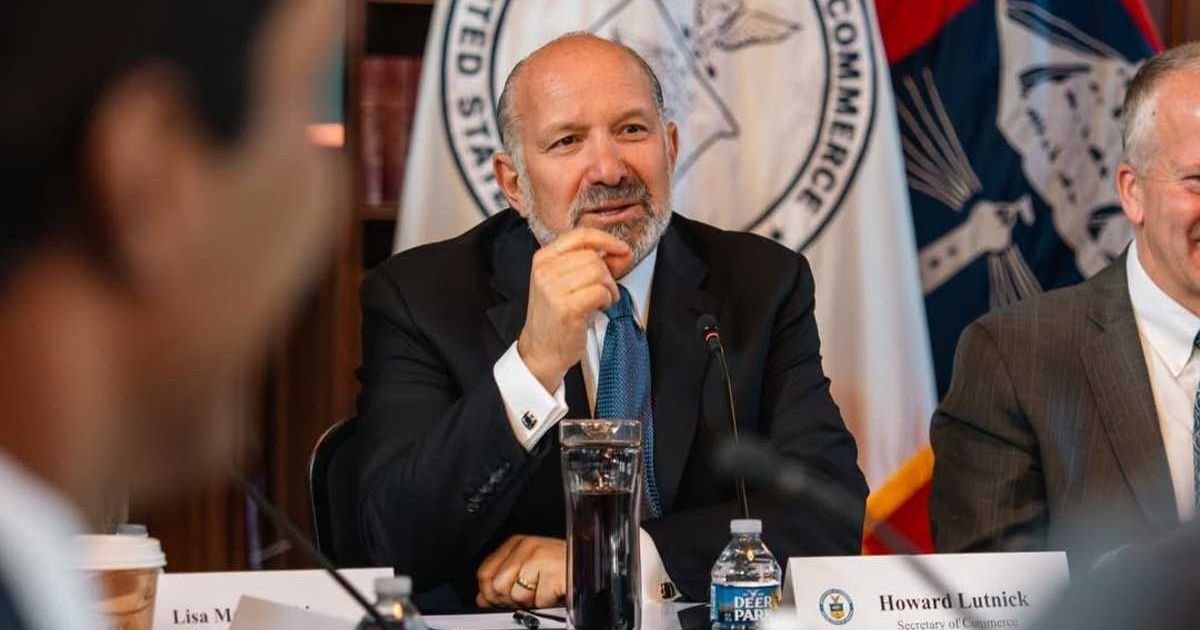
Howard Lutnick, the CEO of Cantor Fitzgerald and a survivor of the 9/11 attacks where his firm lost 658 employees, brings a unique and personal perspective to his role as Commerce Secretary. Appointed by President Trump, Lutnick has long been a vocal advocate for American business resilience and bolstering our own economy rather aiding every foreign nation that asks.
His background in finance and his personal experiences have shaped his views on sovereignty and self-reliance, making him a fitting messenger for an administration focused on protecting American interests above all.
The World Economic Forum, held annually in Davos, Switzerland, has for over 50 years served as a hub for global leaders, CEOs, and policymakers to discuss international cooperation, trade liberalization, and sustainable development. Founded by Klaus Schwab in 1971, the WEF has pushed globalization as a "path to prosperity," promoting open borders, free trade agreements, and multinational supply chains.
Critics, including many conservatives, have argued that this model has eroded national identities, weakened domestic manufacturing, and empowered adversaries like China at the expense of Western nations.
Lutnick's appearance marked a pivotal moment, as he directly tied the WEF's principles to the problems facing America today. "The Trump Administration and myself, we are here to make a very clear point - globalization has failed the West and the United States of America," he said.
"It's a failed policy. It is what the WEF has stood for, which is export, offshore, far-shore, find the cheapest labor in the world and the world is a better place for it."
Howard Lutnick, 2026.
He elaborated on the consequences, explaining how this approach has devastated American communities. "The fact is it has left America behind. It has left the American workers behind. And what we are here to say is 'America First' is a different model, one that we encourage other countries to consider, which is that our workers come first," Lutnick continued.
This sentiment echoes the Trump administration's broader economic strategy, which includes tariffs on imports, incentives for reshoring manufacturing, and a focus on energy independence through domestic oil and natural gas production.
The panel, moderated by Columbia University's Adam Tooze, included notable figures such as Canada's Finance Minister François-Philippe Champagne, UK Chancellor of the Exchequer Rachel Reeves, Bank of America CEO Brian Moynihan, and EY CEO Janet Truncale.
Discussions ranged from trade barriers to energy security, with Lutnick pushing back against European green energy ambitions. He questioned the logic of Europe's push for net zero emissions by 2030, pointing out their lack of domestic battery production. "Why are you going to do solar and wind? Why would Europe agree to be net zero in 2030 when they don't make a battery? They don't make a battery," he said. "So if they go 2030, they are deciding to be subservient to China, which makes a battery."
This critique highlights a key concern in conservative circles, the risk of Western nations becoming dependent on China for critical technologies, which could compromise security and economic leverage. Lutnick contrasted this with America's abundant resources, noting, "Why would the United States of America which has oil and natural gas try to convert to all electricity? China does not have oil and natural gas. Electricity and electric cars make perfect sense to them. That is practical and logical."
Lutnick emphasized the importance of sovereignty, defining it as control over borders and essential industries. "Sovereignty is your borders. You're entitled to have borders. You shouldn't offshore your medicine. You shouldn't offshore your semiconductors.
You shouldn't offshore your entire industrial base and have it be hollowed out beneath you," he stated.
"You should not be dependent for that which is fundamental to your sovereignty on any other nation. And if you're going to be dependent on someone, it darn well better be your best allies."
Howard Lutnick, 2026.
He wrapped up his opening remarks by underscoring America's role in global stability. "I want to point out that when America shines, the world shines. Close your eyes and think of a world without America in it. It becomes pretty dark pretty darn quickly," Lutnick said, reinforcing the idea that a strong America benefits allies while protecting its own interests first.
The panel also touched on contentious issues like US efforts to acquire Greenland for national security reasons, amid threats of tariffs on European nations including Denmark, Norway, Sweden, France, Germany, the UK, the Netherlands, and Finland. Lutnick described the situation as "diplomacy and talking," starting with a "kerfuffle," but left details to national security officials, stressing the Western Hemisphere's importance to US interests.
Responses from other panelists showed a mix of agreement and pushback. EY CEO Janet Truncale countered, "Globalization's not going away, it's just becoming more complex." UK's Rachel Reeves acknowledged shared goals of resilience but emphasized alliances, saying, "Even a country as big and as strong as America also relies on its allies." Canada's François-Philippe Champagne highlighted the need for resilience in supply chains and critical minerals, noting Canada's role as a major US trading partner.
On social media platform X, Lutnick's remarks quickly gained traction, with users praising the direct challenge to globalist ideals.
General Mike Flynn posted, "The 'WEF' Whiffed. @Howardlutnick05 nails it. Globalization has failed but they won't go away without a fight. Steady everyone." Rob Roos, a former European Parliament member, shared the video with the caption, "DAVOS, MEET REALITY. US Secretary Lutnick: 'Globalization failed the West. It hollowed out our industries, weakened sovereignty, and empowered adversaries.' The WEF model? Just wind-blown dependency. America First means borders, jobs, and independence. Exactly where EU bureaucrats fail, because they are the WEF."
Other reactions included Sam Brokken calling it a demolition of the WEF, and various users celebrating it as a historic moment signaling the end of unchecked globalism. The official US Commerce Department account amplified the speech, stating, "Globalization has FAILED. America is done exporting jobs and offshoring its future. We will no longer give in to globalization."
Lutnick's speech aligns with the Trump administration's actions, including preliminary trade agreements with Europe for $750 billion in US energy purchases, $600 billion in investments, and additional military equipment buys. A joint US-UK memorandum commits $350 billion to AI, nuclear energy, and quantum computing. These deals come amid stock market dips in Europe due to tariff threats, but Lutnick noted global markets are up overall, dismissing fears of economic destruction.
This moment at Davos signals a broader shift in US policy, prioritizing traditional American values of self-reliance, strong borders, and worker protection over multinational agendas. By confronting the WEF directly, Lutnick reinforced that America's strength lies in its sovereignty, not in dependencies that weaken the nation.
As President Trump prepares to promote his Gaza Peace Board and advance US interests, the administration's message is clear, globalization's era of unchecked offshoring is over, and a new focus on national prosperity will guide the way forward.