
On the surface, the United States still feels busy and crowded. Underneath, the basic math of survival shows us headed towards a population collapse. Americans are no longer having enough children to replace themselves, and the people who should be sounding the alarm are busy insisting that mass immigration can patch every hole.
It comes as a long series of quiet drops in births, shrinking school classes, and aging towns.
Demographers use a simple benchmark. A developed country needs about 2.1 children per woman over her lifetime to keep its population stable without large-scale immigration.
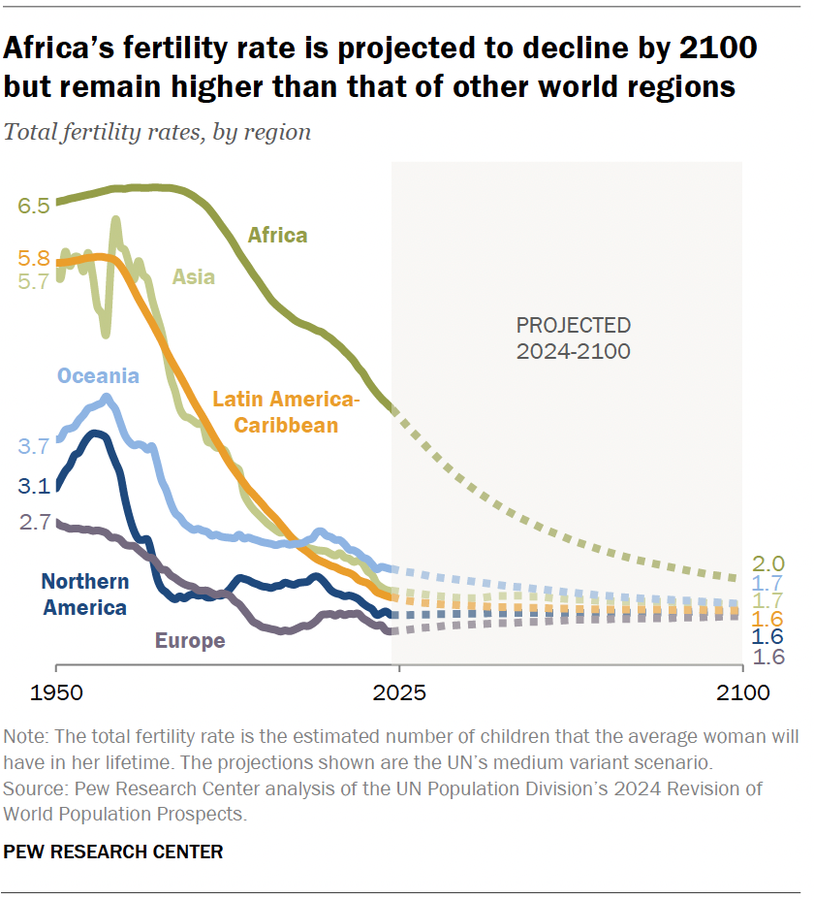
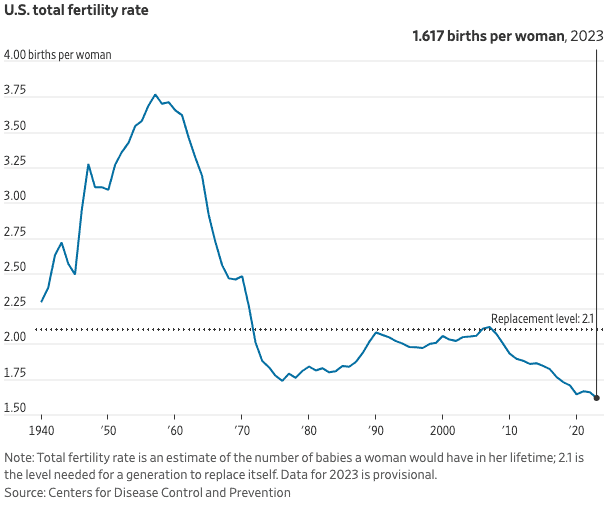
In recent years, the United States has hovered around 1.6 children per woman, with many women opting never to have them, even making abortion "acceptable" to avoid responsibility.
Federal data show that the general fertility rate, births per 1,000 women of childbearing age, has fallen to the lowest level on record, with about 3.59 million births in 2023, the lowest in more than four decades. Each new generation is smaller than the one aging into retirement.
Official projections reflect this. Social Security and related reports show a country with having more and more older people, with relatively fewer students and workers in the coming decades. Age structure charts show the share of citizens over 65 rising steadily, while the working-age population grows only slightly or stalls. That means fewer people staffing hospitals, power plants, farms, factories, and small businesses, and more people drawing pensions and medical care. The bill lands on the young, who will be fewer in number and under increasing pressure.
This demographic shift is already visible in the real economy. Employers across construction, manufacturing, energy, and logistics report difficulty finding reliable younger workers. Trade schools, apprenticeship programs, and family-run shops see thinner cohorts coming up behind the older generation. Many owners have no one to hand their business to when they step back.
The answer from big business and political elites has been predictable: if the country does not produce enough of its own workers, bring in more from abroad, and wrap the demand in "moral" language.
Once that approach takes hold, "labor shortage" debates stop being about birth rates and culture and become arguments for ever-higher inflows of foreign workers. Visas expand, enforcement weakens, and any effort to slow or reverse the process gets smeared as hateful. Over time, this rewires the country. The people whose ancestors built the institutions and laws of the United States find themselves sharing control with newly arrived blocs that bring different loyalties, customs, and political habits. A population that refuses to replace itself invites others to occupy the space.
Japan offers a glimpse of the long-term outcome. Its total fertility rate has fallen to around 1.2 children per woman, among the lowest in the world.
In 2023, Japan recorded about 727,000 births and roughly 1.58 million deaths, resulting in a natural population decline of more than 840,000 in a single year. Newer figures show births dropping further to around 686,000 in 2024 and population shrinkage continuing for a sixteenth consecutive year. Towns hollow out, schools close, and entire regions gray out as young people disappear.
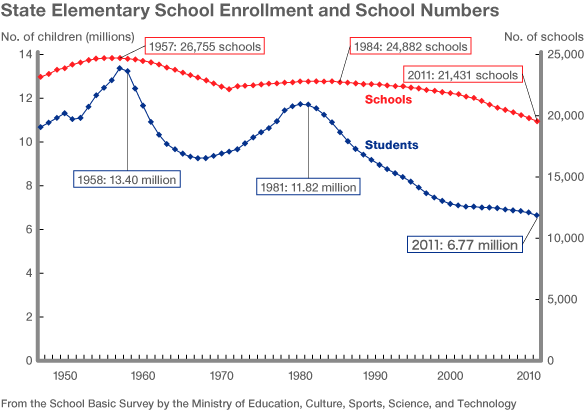
Japanese leaders now speak openly about a national emergency. There are not enough young workers to support social programs or care for the elderly. Government incentives have tried to coax birth rates higher. Still, once the social norm shifts away from early marriage and larger families, cash and tax incentives alone cannot easily reverse the trend.
Japan insists on remaining Japanese, understandably so, and therefore keeps immigration relatively low, accepting economic pain to preserve identity. American elites prefer the reverse: maintain growth by importing replacement labor, and treat concerns about culture, cohesion, and citizenship as a problem to be silenced.
The roots of this crisis are cultural as much as economic. For decades, left-wing institutions have targeted the core pillars that keep a people going across generations: marriage, faith, family, and national pride.
Popular culture constantly conveys the message that a home filled with children is a burden and that self-creation and career are the real purpose of life. Universities and media outlets paint traditional roles as backward or oppressive. Religion and patriotism get framed as embarrassing or hateful. Under that kind of pressure, young adults delay or reject marriage, limit or avoid children, and float through life attached mainly to screens and short-term pleasures.
Life has increasingly shifted from real communities to virtual ones. Evenings that once included church events, neighborhood gatherings, or volunteer activities now often disappear into social media, online games, and streaming services. These online spaces rarely foster lasting marriages and families.
Sociologists observing modern societies note a concerning trend: as traditional institutions that once brought people together weaken, both marriage and birth rates decline.
The result is a self-reinforcing loop (more like a downward spiral) of fewer families, weaker communities, more isolation, more dependence on digital life, and even fewer families in the next round.
The effects reach into every corner of national life. Schools consolidate or close as student numbers shrink. Rural areas that once had multiple classes per grade now struggle to keep basic services.
Military recruiting pools are shrinking, straining our national defense.
Skilled trades lose continuity as older experts retire without passing on their craft to enough younger workers.
In politics, an aging electorate leans toward higher consumption and lower risk, while a smaller young cohort has less leverage to insist on long-term reforms.
The country needs to recognize that low fertility and demographic decline are central strategic threats, not side issues. Policy should be structured to support families who actually raise children rather than treating them as an afterthought.
Housing and land-use regulations can be loosened so that young parents can afford space to grow. Schools can be pulled back from ideological warfare and put under firmer parental control, so that mothers and fathers can trust the environment they are sending their children into.
Most of all, there needs to be a cultural turn back toward honoring family life and respecting the people who choose it. Strong marriages, many children, connection to church and country, and rooted local communities are signs of health, not targets for mockery. A people that values its own existence will want more of itself in the future and will act accordingly. Immigration policy then becomes a tool to protect and complement that core, not a permanent substitute for it.
The numbers show where the United States is heading if nothing changes, it means fewer American children, fewer American workers, and more dependence on outside populations to keep the system running.
The path back runs through traditional values, conservative ideals, and restored respect for the family. Without that, arguments over budgets and benefits will not matter. A country that stops creating future generations is writing its own ending.