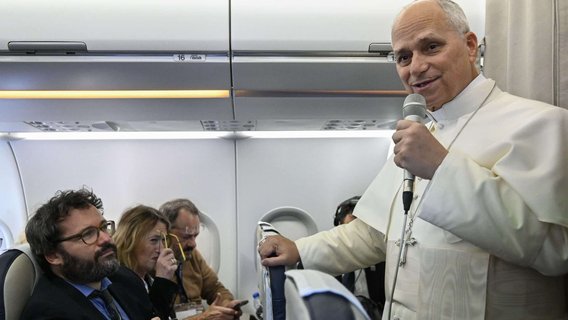
Pope Leo's comments on Muslim immigration and fear in the West are part of a long pattern where recent popes bless demographic surrender and then guilt-trip believers by calling it "Christian virtue," despite going against all the values of Christianity.
On the plane back from Turkey and Lebanon, Pope Leo was asked what he would say to Catholics in Europe who see Islam and mass Muslim immigration as a threat to the West's Christian identity.
He replied that such fears are "often generated by people who are against immigration and trying to keep out people who may be from another country, another religion, another race," explicitly framing opposition to large‑scale, non‑Christian inflows as rooted in prejudice rather than prudence.
Jesus taught that true conversion requires a fundamental change of heart, mind, and will. This involves a willing turning away from sin and toward God, a process described as being "born again" (John 3:3) and entering the "Kingdom of God." It necessitates both repentance (turning away from sin) and faith (trusting in the Gospel).
He emphasized this transformation through parables like the sower, showing some hearts receive the Word and bear fruit, while others let distractions choke it, or harden themselves against it. For Christians, this leads to discipleship and to sharing the good news, and in some cases raising the sword, not pacifism to the point of destruction, as the liberals would have it.
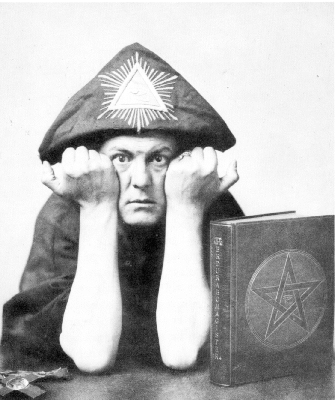
The Pope takes another stance, saying basically, "accept everyone and everything, do as thou wilt." This is precisely what occultist Aleister Crowley said. Crowley's most famous quote, central to his religion of Thelema, is "Do what thou wilt shall be the whole of the Law." This is a rejection of everything the Bible teaches.
As his positive model, he pointed to Turkey and especially Lebanon as examples of "dialogue and friendship between Muslims and Christians," holding Lebanon up as proof that Christians and Muslims can "live together and be friends."
In other words, when confronted with Catholic fears about Islam in Europe, Leo's instinct is to scold his own flock and romanticize one of the most tragic demographic and sectarian experiments in modern Middle Eastern history.
Lebanon's reality is that the population has gone from Christian majority to those people being a fractured remnant.
Lebanon once had a clear Christian plurality and arguably a thin Christian majority in the mid‑20th century, with many estimates putting Christians around half or slightly more of the population before the 1975 civil war.
Today, best‑available figures (excluding refugees) put Christians at roughly one‑third or slightly less of the citizen population, with Muslims (Sunni and Shia combined) making up about two‑thirds; when you factor in large Palestinian and Syrian refugee populations, the Christian share of everyone physically in Lebanon falls further.
Local studies show catastrophic Christian collapses in specific areas: in southern Mount Lebanon, the Christian share dropped from about 55% in 1975 to around 5% today; in West Beirut, from 35% to about 5%; and in other regions, from roughly a quarter to low double digits.
The drivers are exactly the forces Leo refuses to name, those being far higher Muslim birth rates, waves of Palestinian and later Syrian and Iraqi refugees (overwhelmingly Muslim), Christian emigration, and a political system that rewarded armed factions.
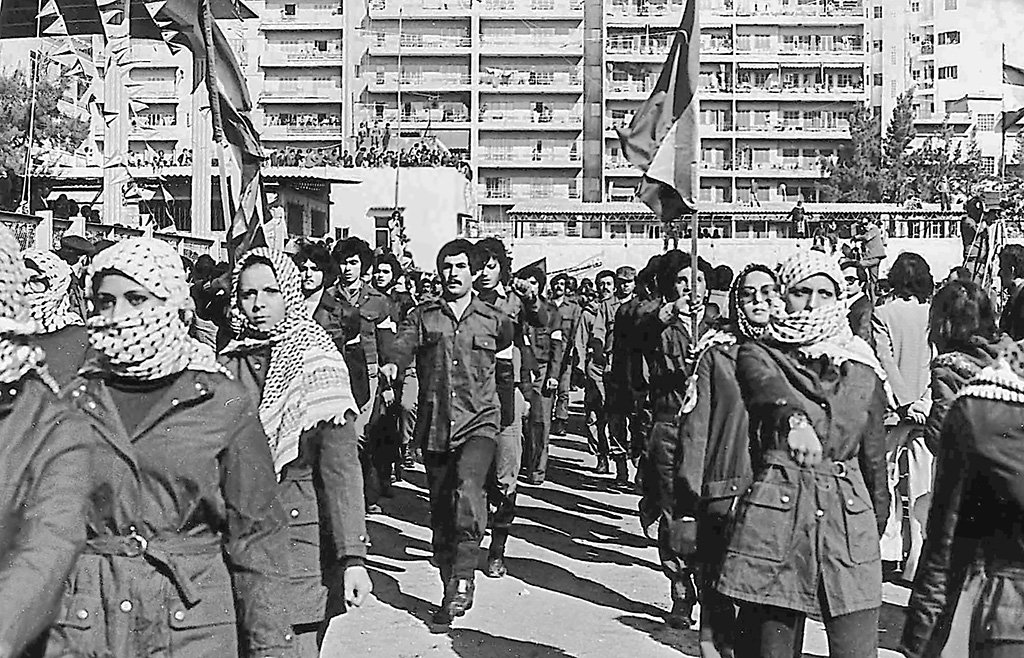
Lebanon's 1975 to 1990 civil war was intimately tied to demographic change and the "sudden" weight of armed Palestinian organizations and refugee populations inside the country, a shift many Christian factions saw as existential.
The post‑war settlement never disarmed Hezbollah, a Shia Islamist militia built and funded by Iran that now holds a dominant armed position in the country, beyond the control of the Lebanese state.
Hezbollah's weapons and cross‑border raids have dragged Lebanon into devastating conflicts with Israel, including the 2006 war and the more recent fighting in 2023-2024, battering the economy and further accelerating Christian flight and national collapse.
Calling this situation a "model" of coexistence is an insult to the Christians who saw their neighborhoods emptied, their share of the population gutted, and their national institutions hollowed out while Western churchmen chanted "dialogue."
Pope Leo's rhetoric on migrants and Muslims tracks almost perfectly with the line set by Francis and echoed by Western bishops' conferences: migration is cast as an unquestioned good, resistance to mass inflows is framed as fear or bigotry, and the priority is always "welcoming, protecting and integrating" newcomers, rarely defending the demographic continuity of existing Christian peoples.
Official Catholic social documents and U.S. bishops' statements now regularly denounce criminalization of illegal entry and call for broad amnesties, while saying virtually nothing about the right of Christian nations to remain recognizably Christian in faith, culture, or population.
Against that backdrop, Leo's comments are not a surprise; they are the logical next step of a hierarchy that speaks endlessly about "human rights" and "accompaniment," but treats the survival of actual Christian communities, whether in America, Lebanon, or in Europe, as "negotiable."